


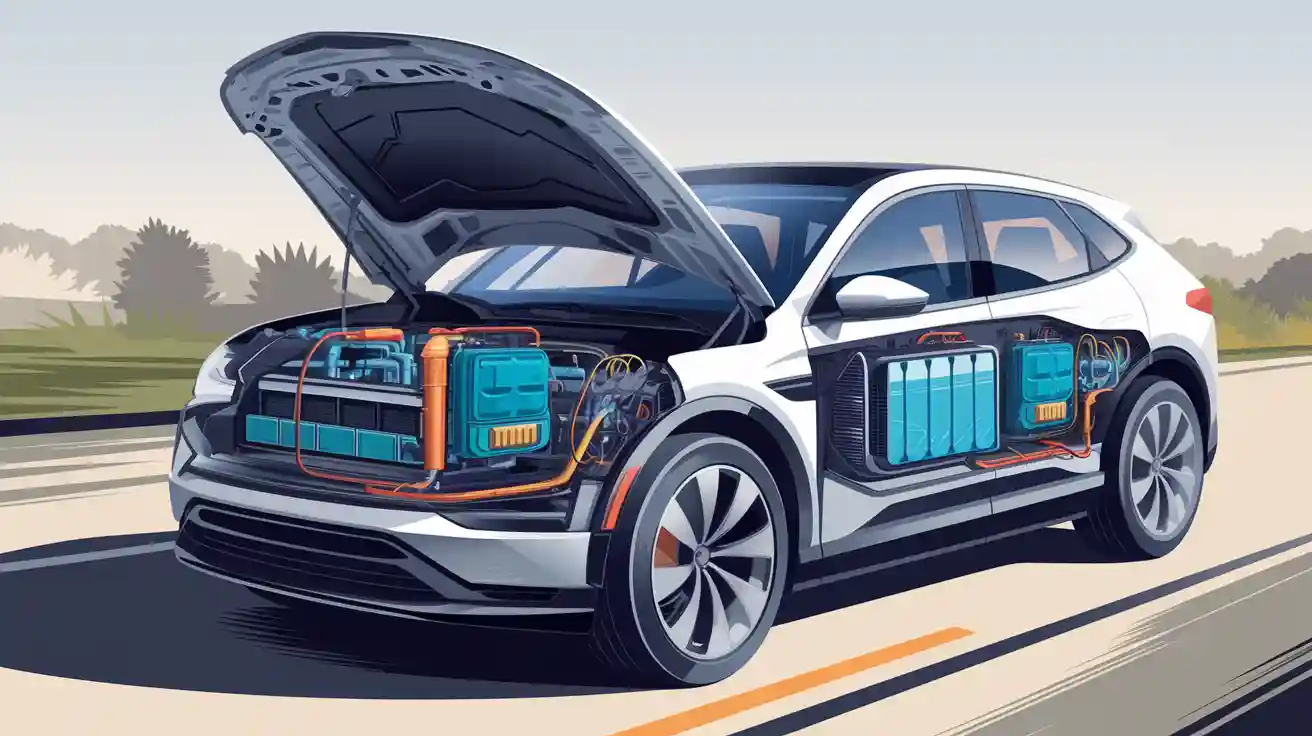
For a century, vehicle thermal design followed one playbook: manage the heat coming out of a combustion engine. Radiators up front, airflow through the engine bay, exhaust heat routed away from anything that could cook. Engineers got very good at that problem. Then electrification arrived and quietly rewrote the rules. The heat sources moved, the temperatures changed character, and the parts that manage them had to change too.
This matters for component design more than most people realize. The housings, enclosures, and structural brackets that surround a vehicle’s drivetrain are not passive containers. They are thermal management hardware, and the shift to electric and hybrid drivetrains has reshaped what designers need from them. It is a big part of why transportation aluminum castings have become central to vehicle architecture rather than a niche material choice, and understanding the new thermal problem explains where casting design is heading.
How the Thermal Problem Changed
The heat moved. A combustion engine dumps most of its heat through exhaust and coolant, concentrated in one location, at high temperatures. An electric drivetrain spreads its heat across inverters, motor windings, and battery packs, at lower individual temperatures but with far less tolerance for overshoot. Power electronics degrade fast when they run hot. The rule of thumb in electronics reliability is that every 10 degrees Celsius of sustained temperature rise roughly halves the life of many components. A housing that was thermally adequate for a gearbox may be quietly cooking the inverter bolted to it.
The heat became continuous. A combustion engine heats up, runs, and cools down with every trip. An electric vehicle’s power electronics manage energy constantly: accelerating, regenerating, charging. Charging in particular is a thermal event that combustion vehicles never had. Fast charging pushes significant current through connectors, cables, and onboard electronics, generating heat at times and in places the old playbook never accounted for.
The airflow changed. Electric drivetrains are compact and often sealed, which means less natural airflow through the vehicle and more reliance on conduction. Heat has to be pulled out of the component and carried somewhere useful, and the path it takes runs through the housing. A sealed enclosure with poor thermal conductivity becomes an oven.
Weight became a thermal decision. In a combustion vehicle, a heavier cooling assembly cost some fuel economy. In an electric vehicle, every pound of non-battery mass directly eats range, and range is the headline specification buyers compare. Thermal hardware that is heavy is thermal hardware that hurts the product’s most visible number.
Why Cast Aluminum Fits the New Problem
The material requirements that fall out of this new thermal picture read like a description of cast aluminum.
Thermal conductivity. Aluminum conducts heat roughly three to four times better than cast iron and far better than most steels. For a housing surrounding power electronics, that means the enclosure itself acts as a heat spreader, pulling thermal energy away from hot spots and distributing it to surfaces where it can dissipate. The housing stops being an insulating box and becomes part of the cooling system.
Integrated cooling geometry. This is where casting earns its place over fabrication. A cast housing can incorporate cooling fins, thickened thermal pads under hot components, and mounting bosses positioned exactly where conduction matters, all in one pour. Building the same part from sheet metal and machined blocks requires joining, and every joint is a thermal resistance. In thermal design, the best joint is the one you eliminated.
Weight. Cast aluminum delivers this thermal performance at roughly a third the weight of an iron equivalent. For hybrid vehicles, which carry two drivetrains and are permanently fighting mass, and for electric vehicles, where mass is range, the weight argument is not a bonus. It is a requirement.
Corrosion behavior. Electric and hybrid vehicles introduced new corrosion considerations that nobody in the combustion world worried much about. Battery enclosures and electrical housings get exposed to road salt, moisture, and washdown, and aluminum’s self-renewing oxide layer handles that exposure without a coating schedule. The material protects itself for the life of the vehicle, which matters when the component is sealed and inspecting it means tearing the vehicle apart.
EMI shielding. A conductive metal enclosure provides electromagnetic shielding for sensitive electronics, something plastic enclosures cannot do without added measures. As vehicles fill with power electronics and control boards, the shielding function of the housing has grown from an afterthought to a design requirement.
What Casting Design Actually Did Differently
The interesting part is not that aluminum got used. It is how the design language of the castings themselves changed.
Housings grew features. Older cast housings were mostly containers with bolt bosses. Housings for electrified drivetrains carry fin fields, integrated coolant channels in some designs, and mounting surfaces machined flat specifically for thermal contact with power modules. The casting is designed as a heat exchanger first and a container second.
Parts consolidated. Where a combustion vehicle might have a separate bracket, enclosure, and shield, an electric drivetrain casting frequently combines all three. Consolidation removes joints, and joints are where both heat flow and structural reliability suffer. Fewer parts also means fewer fasteners to loosen under the constant vibration that defines vehicle service.
Wall thickness became a thermal variable. In structural castings, wall thickness is about load. In thermal castings, thickness under a hot component is about conduction path. Designers now specify local thickening in areas that need to pull heat, something a casting handles naturally and a fabrication handles awkwardly.
Inspection requirements tightened. Power electronics housings and structural battery-adjacent components carry low tolerance for internal defects, because a porosity cluster in a thermal path or a load-bearing boss is a failure waiting for a warranty claim. That is why radiographic inspection of internal soundness, dimensional verification of sealing and thermal surfaces, and first article inspection before production ramp have become standard practice for these parts. The quality bar that aerospace and defense castings live under has migrated into the vehicle world, and the foundries that already worked to those standards were the ones positioned to serve it.
The Hybrid as the Hardest Case
It is worth noting that hybrids, which sometimes get treated as a transitional afterthought, present the most demanding version of this problem. A hybrid vehicle carries the thermal load of a combustion drivetrain and an electric one, in the same package, with less space for either. Components that sit between the two systems see heat from both sides, plus the vibration of an engine, plus the electrical environment of power electronics. The castings that survive that duty are the ones engineered for conduction, stiffness, and corrosion resistance simultaneously, which is a good description of what modern vehicle casting design has become.
The Bottom Line
Electrification did not just change what powers vehicles. It changed where the heat is, how it moves, and what the hardware around it must do. The housings and enclosures that used to be simple containers are now thermal components with jobs that show up directly in vehicle range, reliability, and service life. Cast aluminum fits this new problem because it conducts heat well, weighs little, resists corrosion without help, and can be shaped into consolidated geometries that fabrication cannot match economically. The vehicle manufacturers who understand this are designing their housings as heat exchangers from the first sketch. The ones who still treat enclosures as boxes are learning about thermal management one field failure at a time.